
Daily Spider Solitaire Classic
Big CakeCard
4.91.08K Reviews
- Version
- 17.1.104
- Installs
- 1.00M
- Age Rating
- Everyone
Screenshots
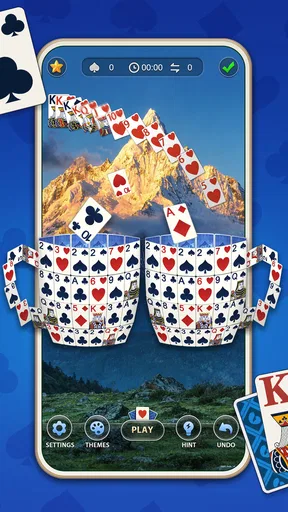
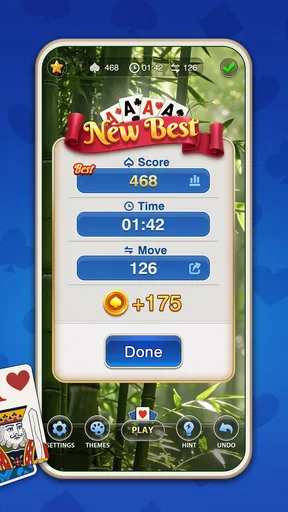
Our Review of Daily Spider Solitaire Classic
 Analysis by Appyee
I usually judge a solitaire game by what happens after the first few sessions. The opening impression is easy: familiar cards, simple controls, and a few quiet minutes that pass pleasantly. The harder question is whether I still want to open it weeks later, when the novelty has gone. After spending time with Daily Spider Solitaire Classic, my answer is cautiously positive. It is a straightforward card game from Big Cake that works best as a calm, repeatable break rather than as a deep strategy title.
The basic appeal is immediately understandable. You arrange cards in descending order, build suited sequences, and try to clear the layout with as few wasted moves as possible. That makes each round easy to start but not completely automatic. I can play while waiting for an appointment, winding down before bed, or taking a short pause between tasks without needing to learn a complicated system first.
It is free to download and suitable for Everyone, which makes it approachable for a wide range of players. The game has also reached over a million installs and holds a 4.9 average from around 43 thousand ratings, so it has clearly found an audience beyond occasional solitaire fans. Those figures do not replace personal experience, but they fit what I noticed: this is designed to be familiar, accessible, and easy to return to.
Why the first week feels so comfortable
During the first week, the strongest quality is the lack of friction. Spider Solitaire is recognizable even if I have not played it for a while, and the game does not ask me to commit to a long session. I can make one move, reconsider the board, and continue at my own pace. That small-scale rhythm gives it a useful place in a busy day.
The game also has a pleasant mental balance. It is more involving than simply watching a video or scrolling through a social feed, but it does not demand the concentration of a competitive card game. I need to look ahead, notice which cards are blocking useful moves, and decide whether to expose a hidden card or preserve a partial sequence. Those decisions are modest, yet they give the round enough structure to feel like play rather than empty tapping.
My favorite early use was a short evening session after finishing work. I did not want a story, a timer, or a noisy challenge. I wanted something with a clear beginning and end. A few careful moves gave me a mental reset without pulling me into a large game world. That is where the “brain training” idea feels most believable: the game encourages observation and planning, although I would not treat it as a serious cognitive-training program.
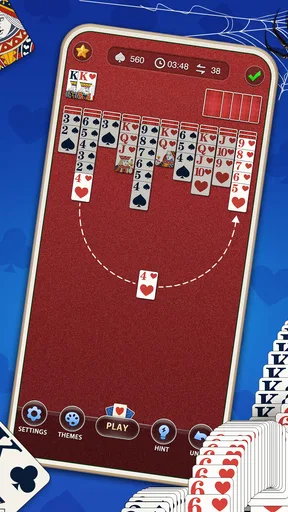
The controls are especially important in a card game, and the familiar drag-and-place interaction makes the board easy to understand. I found that I could focus on the arrangement instead of fighting the interface. That matters on a phone, where a crowded layout or imprecise touch response can turn a relaxing puzzle into a frustrating one.
New players should still expect a learning curve around Spider Solitaire’s stricter rules. Moving a stack is not always the same as moving a complete suited run, and a legal move is not necessarily a good move. In my first sessions, I occasionally opened a card too quickly and left myself with fewer useful options. The game is simple to begin, but playing well requires patience.
One practical habit improved my results: before making an obvious move, I scan the whole board for cards that are currently buried. Exposing a hidden card is often more valuable than extending a visible sequence. This is not a flashy feature, but it is the kind of small decision that gives the game lasting interest during the first several days.
What makes the routine more than random card moving
The best rounds create a gentle chain of decisions. I might first free a column, then use that space to rearrange a mixed sequence, then reveal a card that changes the plan. When several moves are available, I try to preserve flexibility rather than immediately build the longest visible stack. That approach makes the game feel more thoughtful and gives me a reason to replay after an unsuccessful attempt.
There is also value in accepting that not every position should be rushed. I sometimes pause with the board unchanged and mentally compare two routes. One move may look productive because it creates a longer sequence, while another opens a hidden card and keeps more columns workable. For players who enjoy quiet puzzles, this is the part that can turn a basic solitaire app into a dependable habit.
On the other hand, anyone looking for a strong first-week hook may find the experience too restrained. It does not sound like a replacement for a large strategy game, a competitive card battler, or a narrative adventure. Its appeal comes from repetition and clarity, not spectacle. I think that is a strength for the right audience and a limitation for everyone else.
Whether it keeps earning space after the novelty fades
After the initial curiosity wears off, the game’s value depends on how often I genuinely want a quiet puzzle. For me, it works best as a small daily ritual rather than a main game. I can open it when I have ten spare minutes, play a round, and leave without feeling that I have abandoned a larger objective. That makes it easy to maintain because it does not compete heavily with my other entertainment.
The recurring value comes from decision-making, not from a constant stream of new content. Each layout asks me to judge priorities again: which column should I clear, which sequence should I protect, and when should I use an empty space? Even when the rules stay familiar, the order of the cards changes the immediate problem. That variation is enough for short sessions, although it may not satisfy players who need a steady supply of new mechanics.
I would describe the game as a good companion for three recurring situations. First, it suits waiting time when I want something interactive but do not want to start a long session. Second, it works during a low-energy break, because the rules are easy to recall. Third, it can be useful for people who enjoy practicing patience and visual planning without the pressure of another player watching the result.
There is a subtle advantage to keeping a solitaire game in a regular routine: I can use it as a boundary between activities. A single round after lunch or before sleep gives the break a defined shape. I do not need to decide what to watch next or follow a complicated progression. That simplicity is part of the game’s recurring value, especially for someone trying to replace aimless phone browsing with a more focused activity.
Still, the month-to-month experience will vary sharply by player. If I need new boards, unlockable systems, social competition, or a strong sense of progression, the familiar rules may begin to feel repetitive. The game can remain enjoyable, but it does not automatically create a long-term goal beyond improving my choices and completing more rounds.
How it compares with other ways to play solitaire
Compared with a physical deck, this version is more convenient and forgiving for quick sessions. I do not need a table, I cannot accidentally scatter the cards, and I can stop immediately when my break ends. A physical deck still feels better for people who enjoy handling cards or want a screen-free activity, so the digital format is not a universal replacement.
Compared with more elaborate solitaire apps, this one is appealing when I want the card puzzle without a large amount of surrounding decoration. More feature-heavy alternatives may offer broader modes or stronger progression, but they can also make a simple round feel like part of a larger system. Daily Spider Solitaire Classic is easier to understand as a focused pastime.
It also differs from competitive card games because there is no need to manage an opponent, study a changing meta, or worry about a match lasting longer than expected. That makes it a better choice for relaxation and a worse choice for someone who wants social tension or a test of skill against another person.
One trade-off deserves attention: the game is free, but in-app purchases range from $1.99 to $9.99 per item. I would approach those purchases as optional conveniences rather than part of the reason to install the game. Anyone who dislikes seeing purchase options in a casual game should check how comfortable they are with that model before settling into a routine.
Maintenance, fatigue, and the small annoyances that matter
A major advantage is that the game asks very little maintenance from me. There is no large personal setup to manage, no complicated collection to organize, and no need to remember a storyline between sessions. I can put it down for a week and return without feeling lost. That low memory burden is one reason it has better staying power than many games that demand daily attention.
It is also compatible with older devices that run Android 6.0 or later, which broadens its practical reach. The current version is 17.0.32, so players using supported phones can approach it as a lightweight, established option rather than a brand-new experiment. I would still judge performance on the individual device, but the operating-system requirement is not especially demanding by modern standards.
The maintenance burden is therefore less about managing the app and more about managing my own expectations. If I treat every round as a meaningful challenge, repetition may become tiring. If I treat it as a compact mental break, the same repetition becomes the point. The game rewards a modest relationship with it; expecting constant novelty is likely to create disappointment.
The main source of fatigue is the limited emotional range. A successful round feels satisfying, but it does not create the excitement of a close multiplayer win. An unsuccessful layout can be mildly irritating, especially when I realize that an early move closed off the board. After several sessions in a row, the visual pattern and familiar actions can blend together.
I also found that the game is less suitable when I am already mentally overloaded. Solitaire requires enough attention to make choices, so it is not always a restful activity after a difficult concentration-heavy task. In those moments, music or a completely passive break may serve me better. The “relaxing” label is accurate for many situations, but not every mood.
Another useful boundary is session length. The game works well in short bursts, but extended play can expose its repetition quickly. I get more value by stopping after a satisfying round instead of continuing automatically. That preserves the sense that I chose the activity for a purpose rather than falling into an endless loop.
Who should install it, and who should skip it
I would recommend it to someone who already enjoys solitaire, wants a calm card puzzle on a phone, or needs a simple activity for waiting rooms and short breaks. It is also a sensible choice for a family member who prefers familiar rules and an Everyone-rated game rather than a complicated action title. The free entry point makes trying it easy, while the straightforward format avoids a long tutorial.
I would be more hesitant to recommend it to players who need constant unlocks, animated rewards, competitive rankings, or a deep campaign. It is not the right fit for someone hoping to make rapid progress through a large game system. A richer card alternative would be better for that audience, while a physical deck would be better for anyone specifically trying to take a break from screens.
For players worried about whether it is suitable for children, the Everyone rating makes it broadly accessible, but the usual judgment still applies: the value is in the puzzle, not in handing over a phone without limits. For older users, the clear card format may be comfortable, though screen size and touch accuracy will naturally affect the experience on a particular device.
My long-term verdict
Daily Spider Solitaire Classic earns lasting space on my phone when I use it for what it does well: a quiet, low-commitment card puzzle that gives a short break some structure. Its first-week appeal comes from instant familiarity, while its month-to-month value comes from the small decisions inside each layout. The game does not need a dramatic feature list to be useful, but it does need the player to appreciate repetition.
Big Cake has kept the experience focused enough that I can return after time away without relearning anything. That is excellent for maintenance, although it also explains why fatigue can appear if I expect the app to keep surprising me. The free model and broad age rating make it easy to try, while the optional purchases are worth keeping in mind if I prefer completely uninterrupted casual games.
My practical advice is to install it for short sessions and judge it over a few weeks rather than deciding after one round. Try playing when you would normally scroll without purpose, and use the pause before each move to look for hidden-card opportunities instead of chasing the longest visible sequence. If that simple routine feels rewarding, the game has a good chance of becoming a dependable habit.
My final take is that this is a steady utility game, not an endlessly expanding one. I would keep it for waiting time, evening decompression, and occasional brain-focused breaks. I would skip it only if I needed social competition, major progression, or constant novelty. For everyone else, Daily Spider Solitaire Classic is a polished enough free card game to remain useful after the initial curiosity fades, provided its calm repetition matches the kind of entertainment you actually want.
Privacy and Permissions
See what permissions an app requests and how it handles your data.
- Photos/Media/Files
- read the contents of your USB storage, modify or delete the contents of your USB storage
- Storage
- read the contents of your USB storage, modify or delete the contents of your USB storage
- Wi-Fi connection information
- view Wi-Fi connections
- Other
- view network connections, full network access, control vibration, prevent device from sleeping
Verdict
Strengths of Daily Spider Solitaire Classic
- Simple rules make it easy for beginners to start playing.
- Classic card design offers a familiar solitaire experience.
- Games load quickly and are suitable for short breaks.
- Offline play is useful when no internet connection is available.
- Adjustable difficulty can provide a challenge for regular players.
Limitations of Daily Spider Solitaire Classic
- Frequent ads may interrupt the game or appear between rounds.
- The classic presentation may feel repetitive over time.
- Some features may require in-app purchases to unlock.
- Small cards can be difficult to read on compact phone screens.
- Limited social options reduce interaction with other players.
Other Releases by Big Cake
View All


Similar Picks in This Category
View All
Solitaire - Classic Card Games
MobilityWare4.6

UNO!™
Mattel163 Limited4.3

Spider Solitaire: Card Games
MobilityWare4.6

Solitaire.com - Classic Cards
Tripledot Studios Limited4.7

Plants vs. Zombies™ Heroes
ELECTRONIC ARTS4.1

Hearthstone
Blizzard Entertainment, Inc.4.1
Frequently Asked Questions
What is Daily Spider Solitaire Classic?
Daily Spider Solitaire Classic is a digital version of the traditional Spider Solitaire card game, designed for quick and relaxing play on mobile devices. It typically challenges you to arrange cards in descending order and build complete suited sequences from King to Ace. The daily format may provide a fresh challenge, while classic game modes are suitable for casual players and solitaire fans.
How do you play Daily Spider Solitaire Classic?
The objective is to organize cards into complete sequences of the same suit, arranged from King down to Ace. You can move cards between columns when the order is correct, exposing hidden cards and creating space for new moves. Depending on the selected difficulty, the game may use one, two, or four suits, with more suits making planning and problem-solving considerably harder.
Can Daily Spider Solitaire Classic be played offline?
In most cases, the core solitaire gameplay can be enjoyed without a continuous internet connection, which makes it convenient for commuting, traveling, or taking a short break. However, certain features may require internet access, including advertisements, daily challenge synchronization, leaderboards, cloud saves, updates, or promotional content. It is worth testing the app offline after installation.
Is Daily Spider Solitaire Classic free to download and play?
The app is generally available as a free download, allowing users to play Spider Solitaire without an upfront purchase. Free versions may include advertising, optional in-app purchases, or premium features such as ad removal, extra hints, statistics, or additional customization. Before downloading, check the store listing for the current pricing, subscription details, and supported payment options.
Is Daily Spider Solitaire Classic suitable for beginners?
Yes, the game can be suitable for beginners, especially when starting with an easier one-suit or two-suit mode. New players can learn the basic rules gradually by using hints, undo options, and introductory challenges when available. More advanced four-suit puzzles require careful planning, but the classic interface and turn-based gameplay make it easy to practice at your own pace.
Play our best games!


